
The Maker
Pottery at Home
Make a real bowl with your hands, no wheel and no kiln required.
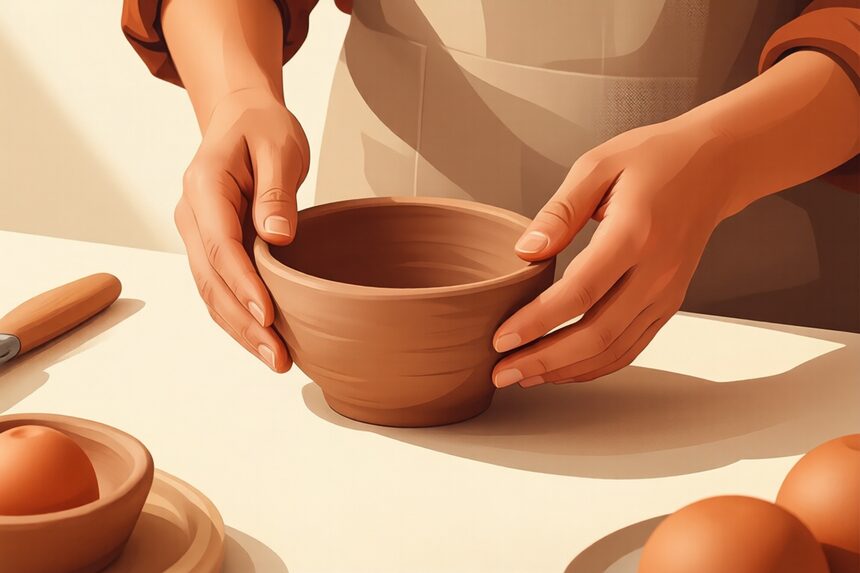
What it actually is
Hand-building pottery means shaping clay with pinch, coil, and slab techniques — the way humans did it for thousands of years before the wheel. You can start at your kitchen table with air-dry clay and zero equipment. Later, real ceramic clay and a local kiln (most pottery studios fire pieces for a few dollars) unlock mugs and bowls you'll actually use.
Reality check
⏱ Time
2–4 hrs/week. Pieces need drying days in between, so it suits a slow rhythm.
↗ Learning curve
Gentle. A passable pinch pot on day one; refined forms take months.
⬚ Space
A table you can get messy and a shelf to dry pieces. Cleanup is the real cost.
Real costs
Three honest budgets
- Air-dry clay (a starter block is often under $10, sometimes free from a friend who quit)
- A butter knife, fork, and dowel you already own as your first tools
- 2 kg block of quality air-dry clay
- Basic wooden rib + loop tool set
- Cheap banding wheel (turntable) for even shaping
- 25 lb of real ceramic stoneware clay
- A few firings at a local community studio
- Underglaze starter set for color
We always show the cheapest honest way to start first — the $0 option comes before anything you'd buy.
Your first 30 minutes
Do this today
- 1 Cover your table with newspaper or a cheap plastic cloth.
- 2 Take a fist-sized ball of clay and press your thumb into the center.
- 3 Pinch and rotate, walls first, until you've got a small bowl ~1 cm thick.
- 4 Smooth the rim with a damp finger. Set it somewhere out of direct sun to dry.
7-day starter plan
Your first week
Questions people ask
Do I need a kiln to start pottery at home?
No. Air-dry clay needs no firing. When you want durable, food-safe pieces, most community studios will kiln-fire your work for a small fee.
Is pottery expensive to get into?
You can start for under $10 with a block of air-dry clay and tools you already own. A more serious setup with real clay and studio firings stays under $100.
Join the Hobby of the Month club
A new hobby every month with a full plan — Pottery at Home could be one of them. Join the waitlist and we'll email you when it opens.