
The Naturalist
Fermentation
Turn a cabbage and some salt into tangy, gut-friendly food with zero gear.
What it actually is
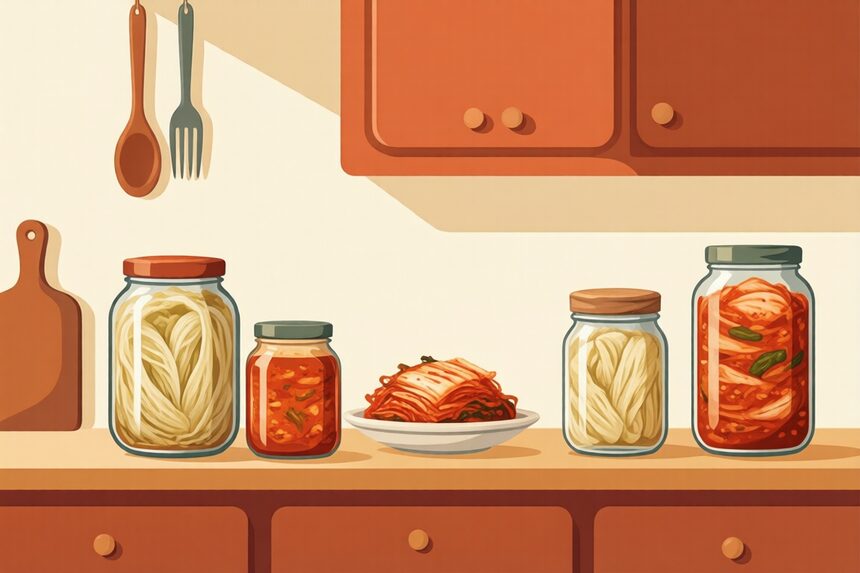
Fermentation is controlled, delicious decay — letting good bacteria transform vegetables into sauerkraut, kimchi, and hot sauce. Your first batch needs nothing but a jar, salt, and patience. It's part cooking, part tiny science experiment, and it rewards the kind of person who likes a precise, repeatable process.
Reality check
⏱ Time
20 min of hands-on prep, then days of doing nothing while it works.
↗ Learning curve
Forgiving. Salt + cabbage is nearly foolproof; flavors deepen with practice.
⬚ Space
A shelf and a couple of jars. No fridge space until it's ready.
Real costs
Three honest budgets
- A clean jar and salt you already have in the cupboard
- One cabbage — a couple of dollars
- Glass fermentation weights to keep veg submerged
- Airlock lids to vent gas without letting air in
- A small ceramic fermentation crock
- pH strips and a kitchen scale for repeatable batches
- A serious fermentation reference book
We always show the cheapest honest way to start first — the $0 option comes before anything you'd buy.
Your first 30 minutes
Do this today
- 1 Shred half a cabbage as finely as you can.
- 2 Weigh it if you can; add 2% of its weight in salt (about 1 tsp per 300g).
- 3 Massage hard for 5 minutes until liquid pools, then pack into a clean jar.
- 4 Press it under its own brine, cover loosely, leave on the counter.
7-day starter plan
Your first week
Questions people ask
Is home fermentation safe?
Salt-brine vegetable ferments like sauerkraut are among the safest foods to make at home — the acidic, salty environment prevents harmful bacteria. Keep everything submerged under brine and trust your nose.
What do I need to start fermenting?
A clean jar, salt, and a vegetable. That's a complete first batch with nothing else required.
Join the Hobby of the Month club
A new hobby every month with a full plan — Fermentation could be one of them. Join the waitlist and we'll email you when it opens.