
The Maker
3D Pen Art
Draw solid objects in mid-air with a pen that extrudes warm plastic.
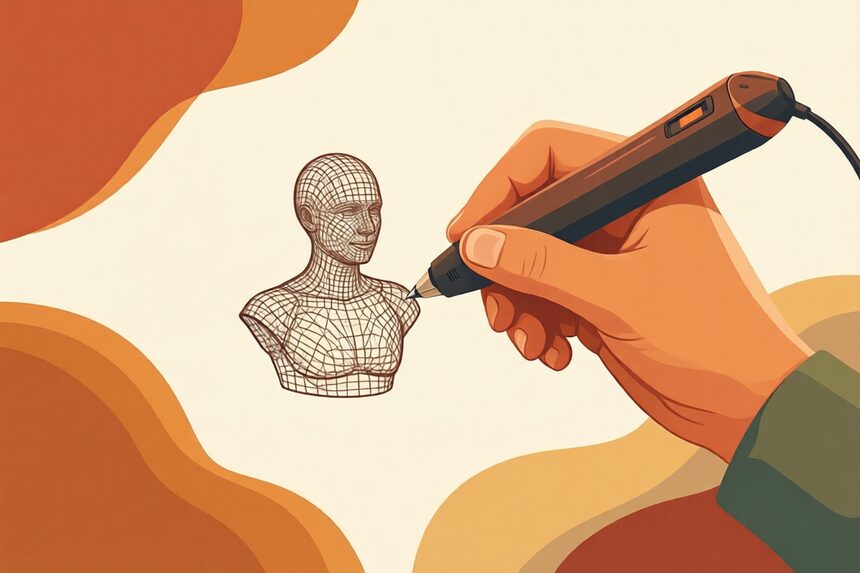
What it actually is
A 3D pen melts plastic filament and lets you 'draw' structures that harden in seconds — like a glue gun crossed with a marker. It's the fastest, cheapest doorway into making three-dimensional objects, with no software, slicing, or printer to learn. Trace a template flat, then assemble the pieces into something that stands up.
Reality check
⏱ Time
Sit-down sessions of 30–60 min. Easy to pick up and put down.
↗ Learning curve
Wobbly scribbles on day one; clean models within a couple of weeks.
⬚ Space
A desk and a window to crack — the warm plastic has a faint smell.
Real costs
Three honest budgets
- Borrow a pen first if anyone you know has one gathering dust
- A beginner 3D pen with adjustable temperature
- A multi-color PLA filament pack
- A quality 3D pen with fine control and a steady feed
- A larger filament assortment
- A silicone work mat and stencil/template set
We always show the cheapest honest way to start first — the $0 option comes before anything you'd buy.
Your first 30 minutes
Do this today
- 1 Let the pen heat up fully — rushing this clogs it.
- 2 On paper, practice drawing slow straight lines, then a flat square.
- 3 Trace a simple flat shape, like a star or a leaf, and peel it off.
- 4 Draw two flat squares and join their edges into a corner — your first 3D move.
7-day starter plan
Your first week
Questions people ask
Is a 3D pen the same as a 3D printer?
No — and that's the appeal. A 3D pen needs no software, slicing, or printer. You draw by hand, which makes it far cheaper and quicker to start than 3D printing.
What plastic is safest for a 3D pen?
PLA filament, made from plant starch, prints at lower temperatures and gives off less odor than ABS, making it the standard safe choice for beginners at home.
Join the Hobby of the Month club
A new hobby every month with a full plan — 3D Pen Art could be one of them. Join the waitlist and we'll email you when it opens.